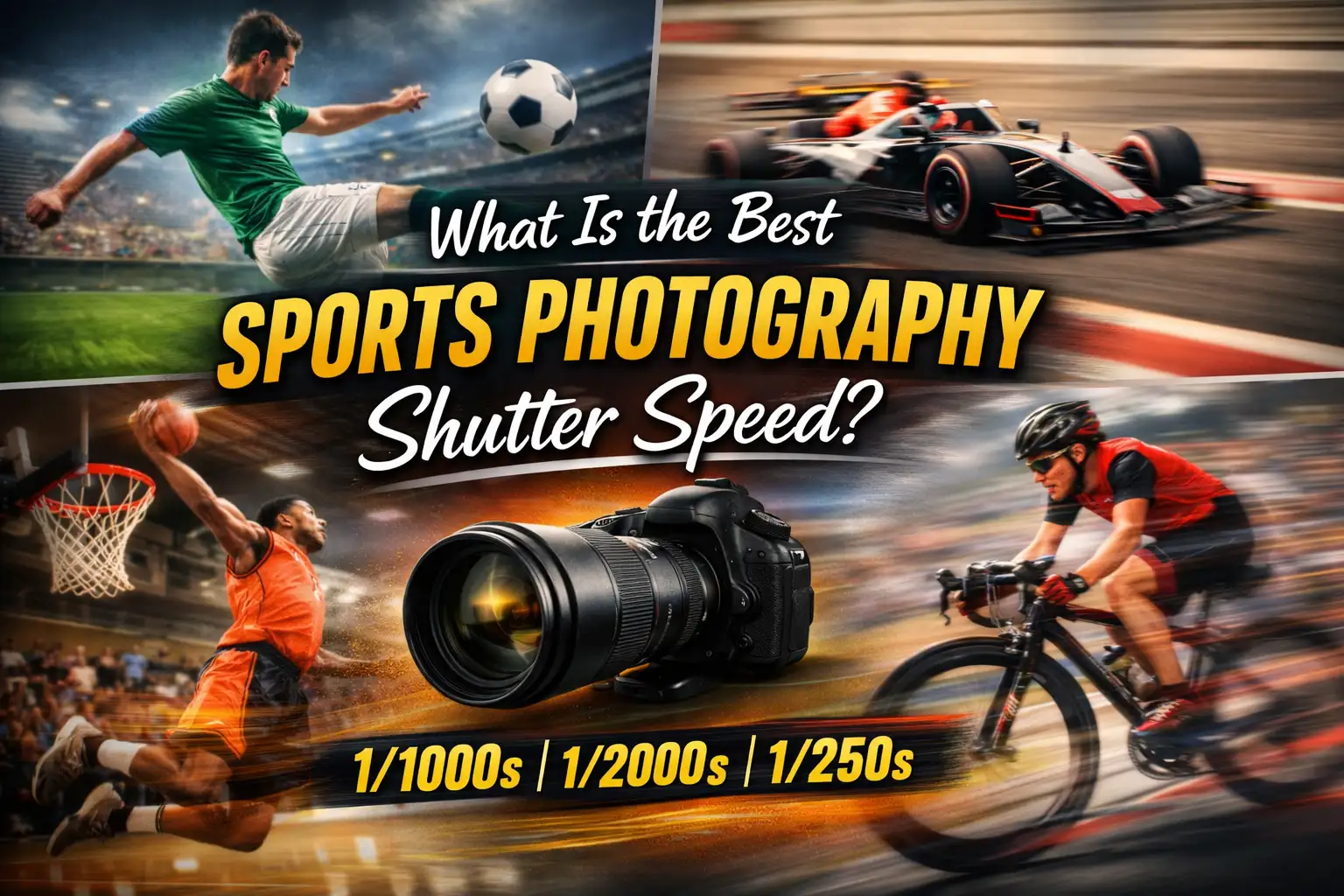

If you have ever tried to photograph a football match, a cricket game, or even your child running across the playground, you already know one thing – action moves fast. One second the athlete is preparing to jump, and the next second the moment is gone. That is why understanding Sports Photography Shutter Speed is one of the most important skills you can learn as a photographer.
As a professional photographer with years of experience shooting sports events, I can tell you that shutter speed is the difference between a sharp, powerful action shot and a blurry disappointment. Many beginners think expensive cameras or lenses matter most. While gear helps, mastering Sports Photography Shutter Speed will improve your results immediately – even with basic equipment.
In this detailed guide, I will explain everything you need to know about Sports Photography Shutter Speed in simple, easy language. We will cover what shutter speed is, why it matters so much in sports, what the best settings are for different types of sports, and how you can adjust it in real situations. By the end of this article, you will feel confident choosing the right Sports Photography Shutter Speed for any game or event.
Let’s begin with the basics.
Understanding Shutter Speed in Simple Terms
Before we talk specifically about Sports Photography Shutter Speed, let’s quickly understand what shutter speed actually is.
Shutter speed refers to how long your camera’s shutter stays open to allow light to hit the sensor. It is measured in seconds or fractions of a second. For example:
1/1000 means the shutter is open for one-thousandth of a second.
1/250 means it is open for one-two-hundred-fiftieth of a second.
1/30 means it stays open much longer.
The faster the shutter speed, the less motion blur you will see. The slower the shutter speed, the more motion blur you get.
In sports photography, movement is constant and often extremely fast. That is why Sports Photography Shutter Speed is usually set much higher than in portrait or landscape photography.
Why Sports Photography Shutter Speed Is So Important
Sports are unpredictable. Athletes sprint, jump, dive, and change direction in a split second. If your shutter speed is too slow, your subject will appear blurry. Sometimes blur can be artistic, but in most sports photography, you want sharpness.
When I shoot professional matches, I am always thinking about Sports Photography Shutter Speed before anything else. Exposure, composition, and focus matter, but freezing the action is usually the priority.
A fast Sports Photography Shutter Speed helps you:
Capture sharp action
Freeze motion in mid-air
Show facial expressions clearly
Highlight details like flying dust or water drops
Create professional-looking images
If you use the wrong shutter speed, even perfect timing cannot save the image.
What Is the Best Sports Photography Shutter Speed?
Now let’s answer the big question: What is the best Sports Photography Shutter Speed?
The simple answer is this: it depends on the sport.
However, as a general rule, most sports require a shutter speed of at least 1/500 second. For faster sports, you may need 1/1000, 1/2000, or even faster.
Let’s look deeper into different situations.
Outdoor Field Sports
For sports like football, soccer, rugby, and hockey, players move quickly across large fields. There is running, jumping, and rapid direction changes.
In these situations, I usually recommend a Sports Photography Shutter Speed between 1/800 and 1/2000.
If the light is good, such as during a sunny afternoon, I prefer using 1/1000 or faster. This ensures every muscle movement and facial expression stays sharp.
For professional-level action where players sprint at top speed, 1/1600 or 1/2000 works beautifully.
The brighter the light, the easier it is to use a higher Sports Photography Shutter Speed without underexposing the image.
Indoor Sports Photography
Indoor sports like basketball, badminton, volleyball, and gymnastics are more challenging. Lighting is usually weaker than outdoors.
Here, you still need a fast Sports Photography Shutter Speed, often around 1/500 to 1/1000. The problem is that indoor lighting may force you to increase ISO.
In my experience, 1/640 is often the minimum safe Sports Photography Shutter Speed for indoor basketball. If players are jumping or dunking, I push it to 1/800 or higher.
You may need to balance shutter speed with aperture and ISO to maintain proper exposure.
Extremely Fast Sports
Some sports are incredibly fast. Think about motorsports, cycling races, or tennis serves.
For motorsports, if you want to freeze the car completely, you may need 1/2000 or even 1/4000.
For tennis, especially during a serve, I recommend at least 1/1000.
In these cases, Sports Photography Shutter Speed becomes critical. Even a small reduction in speed can cause noticeable blur in hands, rackets, or wheels.
When You Might Use a Slower Shutter Speed
Now here is something interesting. Not every sports image needs a super-fast Sports Photography Shutter Speed.
Sometimes, adding motion blur creates drama and energy. This technique is called panning.
For example, when photographing a cyclist, you can use 1/60 or 1/125 while moving the camera along with the subject. The background becomes blurred, but the cyclist remains relatively sharp.
This creative use of Sports Photography Shutter Speed shows motion instead of freezing it completely.
However, this technique requires practice and steady hand movement.
How Aperture and ISO Affect Sports Photography Shutter Speed
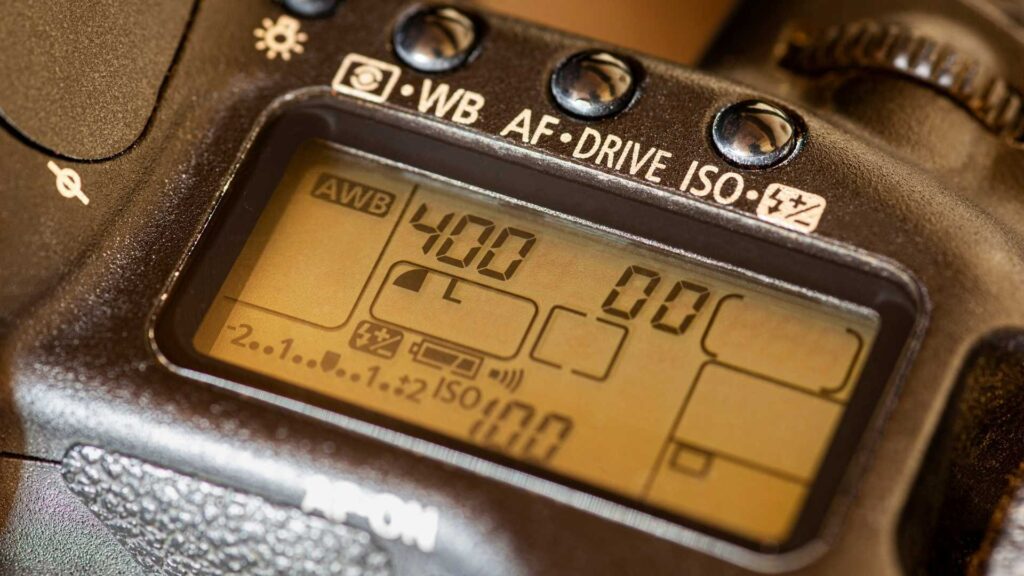
Shutter speed does not work alone. It is part of the exposure triangle, which includes aperture and ISO.
When you increase Sports Photography Shutter Speed, less light enters the camera. To balance this, you may need to:
Use a wider aperture such as f/2.8
Increase ISO to 800, 1600, or higher
In professional sports photography, it is common to see photographers using wide aperture lenses like 70-200mm f/2.8. These lenses allow faster Sports Photography Shutter Speed even in lower light.
Modern cameras also handle higher ISO better, making it easier to maintain fast shutter speeds without too much noise.
Camera Modes for Sports Photography
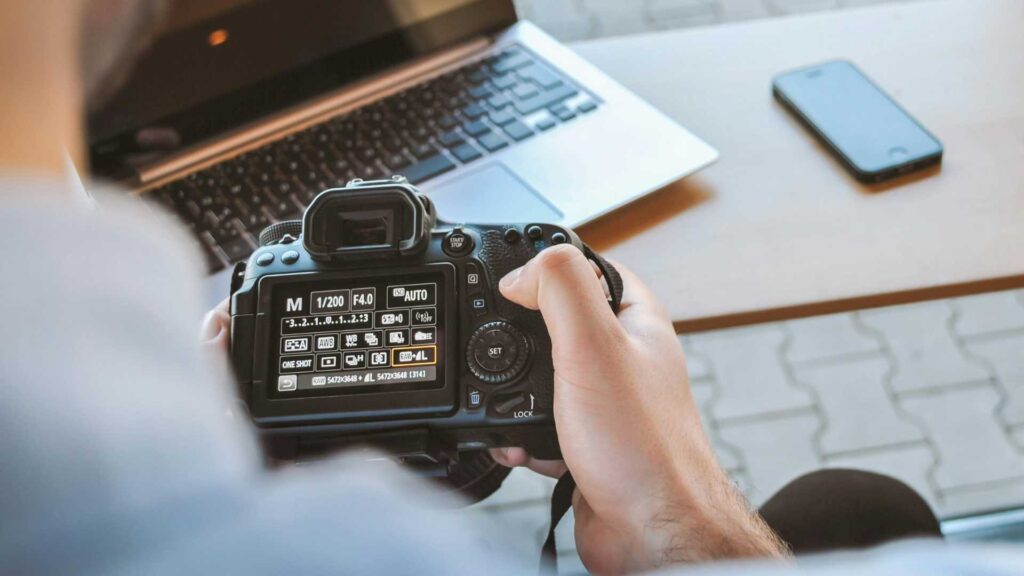
To control Sports Photography Shutter Speed effectively, I recommend using Shutter Priority mode or Manual mode.
In Shutter Priority mode, you set the shutter speed and the camera adjusts the aperture automatically.
In Manual mode, you control everything. This gives you full creative power but requires more experience.
Personally, during professional matches, I use Manual mode with Auto ISO. This allows me to lock in my desired Sports Photography Shutter Speed while the camera adjusts ISO automatically.
Continuous Shooting and Autofocus
Sports photography is not only about Sports Photography Shutter Speed. You also need continuous autofocus and burst mode.
Set your camera to continuous autofocus so it tracks moving subjects.
Use burst mode to capture multiple frames per second. Even with the perfect Sports Photography Shutter Speed, timing matters. Shooting in bursts increases your chance of capturing the perfect moment.
Common Mistakes Beginners Make
Over the years, I have seen many beginners struggle with Sports Photography Shutter Speed. Here are common mistakes:
Using 1/250 for fast action
Forgetting to increase ISO in low light
Relying too much on automatic mode
Not checking images during the game
If your images look slightly blurry, your Sports Photography Shutter Speed is probably too slow.
Choosing the Right Lens for Better Results
While Sports Photography Shutter Speed is critical, your lens also plays a big role. A lens with a wide maximum aperture such as f/2.8 allows more light into the camera. This helps you maintain a fast shutter speed even in challenging lighting conditions.
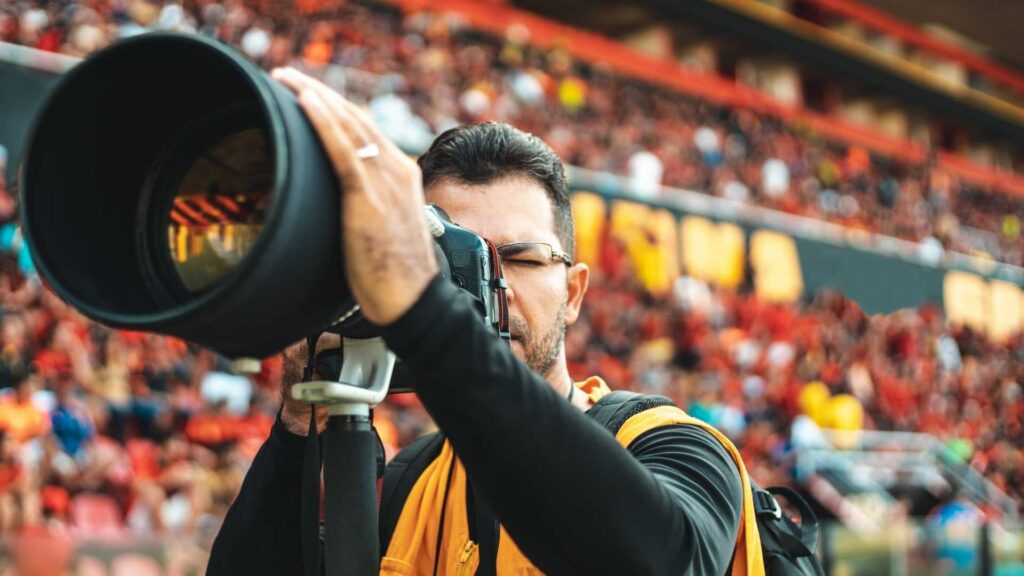
Telephoto lenses are especially useful in sports photography. They allow you to get close to the action without physically being near the players. A 70-200mm lens is a popular choice among professionals. For larger stadiums, photographers often use 300mm or 400mm lenses.
When your lens allows more light, you can confidently increase your Sports Photography Shutter Speed without worrying too much about dark images.
Lighting Conditions and Their Impact
Lighting is one of the biggest factors affecting Sports Photography Shutter Speed. Let’s talk about a few real-world scenarios.
On a bright sunny day, you can easily shoot at 1/2000 with a low ISO like 100 or 200. This gives you very sharp images with minimal noise.
On a cloudy day, you might need to reduce your Sports Photography Shutter Speed slightly or increase ISO to 400 or 800.
During evening matches under stadium lights, things become more challenging. Even professional stadium lighting is not as strong as sunlight. In these situations, I often use 1/800 or 1/1000 and increase ISO to 1600 or even 3200 depending on the camera.
The key is to protect your Sports Photography Shutter Speed first. A slightly noisy image is better than a blurry one.
Different Sports and Recommended Shutter Speeds
Let’s explore more examples so you can understand how Sports Photography Shutter Speed changes depending on the sport.
For football and soccer, 1/1000 is usually perfect for freezing tackles and headers.
For basketball, especially indoors, 1/640 to 1/1000 works well.
For cricket, when capturing a fast bowler delivering the ball, 1/1250 is ideal.
For swimming, 1/1000 helps freeze splashes and strokes.
For athletics like sprinting, 1/1000 to 1/2000 ensures sharp results.
Each sport has its own pace, so your Sports Photography Shutter Speed must match the level of action.
Creative Effects Using Shutter Speed
While freezing action is common, creative photography can also tell a powerful story.
Using a slower Sports Photography Shutter Speed can show motion blur in running legs while keeping the face sharp. This creates a sense of speed and intensity.
Panning with a moving car at 1/80 can create a dramatic racing image with blurred backgrounds.
These techniques require practice, but they add variety to your sports portfolio.
Editing and the Role of Post-Production
Even with the perfect Sports Photography Shutter Speed, editing plays an important role in the final image.
After a sports shoot, I always review and enhance my images. I adjust exposure, contrast, sharpness, and colors to make the action stand out.
Sometimes, due to lighting challenges, images may need noise reduction or background cleanup. Professional editing can transform a good sports image into a stunning one.
If you are a photographer who shoots sports regularly, editing can become time-consuming. That is where professional editing services can help you save time and deliver high-quality images to clients faster.
Final Thoughts on Sports Photography Shutter Speed
So, what is the best Sports Photography Shutter Speed?
The honest answer is that there is no single perfect number. However, for most sports, staying between 1/800 and 1/2000 will give you sharp, professional results. For extremely fast action, go even higher. For creative motion blur, go lower with purpose.
Always remember, in sports photography, sharpness matters. Protect your shutter speed first, then adjust aperture and ISO to balance exposure.
Mastering Sports Photography Shutter Speed takes practice. Attend local games, experiment with settings, review your results, and learn from mistakes. Over time, choosing the right shutter speed will become second nature.